





Casino Economics: Where Profits Come From — Comparing Lac Leamy’s Model and Expansion Options
Opening as an analytical comparison, this piece examines how a full-service, government-operated resort casino like lac-leamy-casino generates profit, where the economic levers sit, and how a hypothetical expansion strategy into Asian markets would compare. The aim is pragmatic: explain mechanisms, highlight trade-offs and common misunderstandings for experienced readers, and provide Canada-specific context on regulation, payments and taxation. Where concrete, stable facts are lacking I flag uncertainty; where forward-looking choices appear, I treat them as conditional scenarios rather than predictions.
How a Crown-Operated Casino Like Lac Leamy Makes Money
At an operational level, revenue for an integrated resort casino breaks down into several stable streams: gaming win (slots, table games, poker), non-gaming operations (hotel rooms, F&B, shows, retail), and ancillary services (parking, conference facilities, VIP services). For a government-run operator the final net in public accounts is also affected by operating costs, mandated community contributions, and taxation flows that differ from private operators.
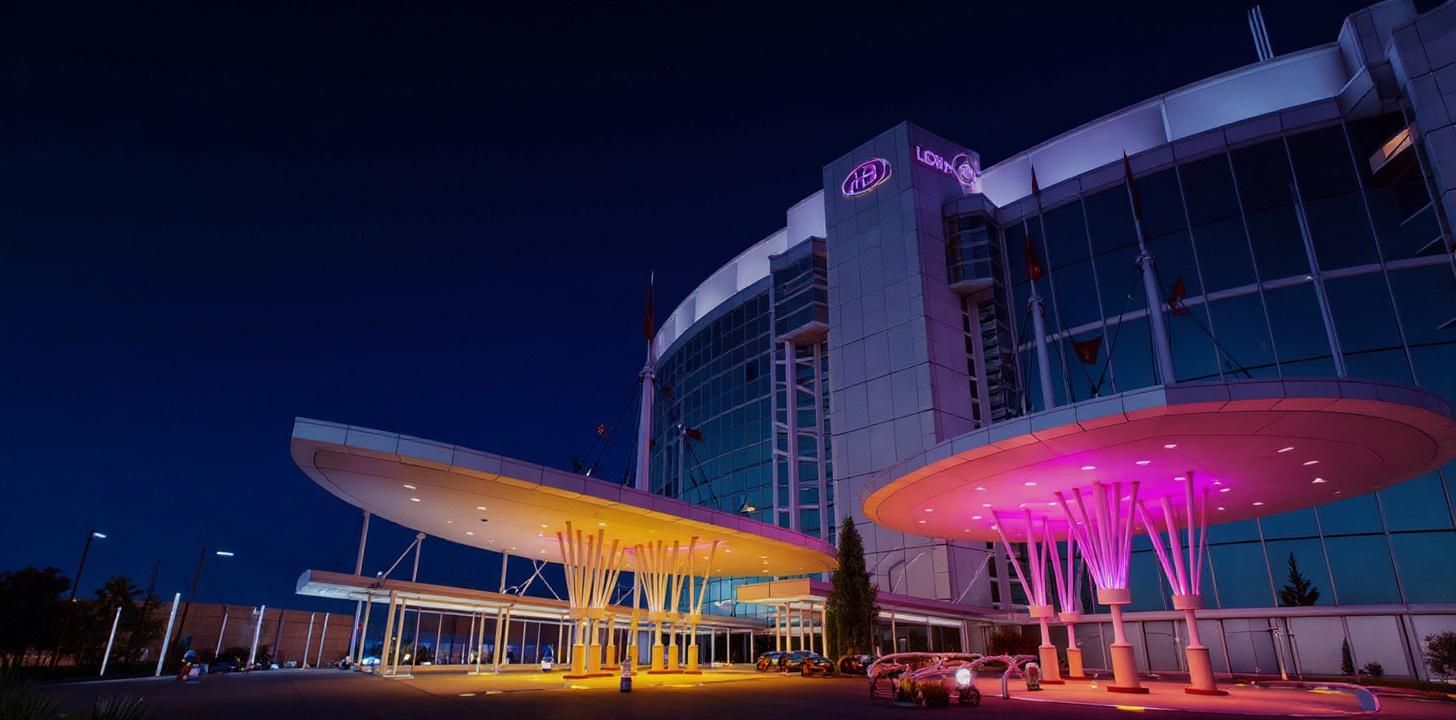
- Gaming win: House edge across games, session length, and machine density determine gross gaming revenue (GGR). Slot floors scale predictably with machine hours played and theoretical hold; table games are more variable but higher margin per seat.
- Non-gaming revenue: Rooms, restaurants, and entertainment often have lower margins than gaming but increase customer stay, raise secondary spend, and help capture tourists—critical for an integrated resort near Ottawa/Gatineau.
- Cost structure: Labour, utilities, compliance, and amortization of capital projects weigh heavily. Public operators may also face different procurement and union regimes that alter OPEX versus private competitors.
Comparison: Lac Leamy’s Local Model vs. Entering an Asian Market
This section compares core economic, regulatory, and market-access factors. The comparison treats Lac Leamy’s current Canadian context (Quebec) as the baseline and contrasts the structural shifts required for an Asian expansion, conditioned on the high variability in regulation across jurisdictions in Asia.
| Dimension | Local Lac Leamy (Quebec, CA) | Hypothetical Asian Expansion (variable) |
|---|---|---|
| Regulatory environment | Provincial Crown oversight (Loto‑Québec), public transparency, domestic legal clarity. | Fragmented: options range from tightly regulated (Macau-style licensing) to restrictive or prohibited markets; licences can be scarce and politically sensitive. |
| Revenue mix | Balanced: heavy gaming GGR but strong hotel/entertainment capture from Ottawa–Gatineau market. | Potentially higher VIP baccarat and high-stakes table revenues in some Asian markets, but dependent on cultural preferences and permitted games. |
| Payment rails | CAD-native systems (Interac, debit, local banking) and low friction for Canadians. | Requires multiple local payment integrations (UnionPay, local e-wallets, cash-heavy flows) and deeper AML/KYC adjustments. |
| Customer acquisition | Regional marketing (Ottawa, Gatineau, Montreal) with existing tourism partners (hotel, theatre). | Expensive: needs local brand-building, partnerships with travel channels, and culturally tailored VIP programs; possible dependence on junket or agent networks where legal. |
| Operational risk | Lower political/regulatory risk; decisions reported within provincial frameworks. | Higher: licensing volatility, foreign-exchange risk, and geopolitical considerations; contract enforcement may be more complex. |
Mechanisms and Trade-offs — What Really Moves Profit Margins
Understanding cash flow requires teasing apart short-run yield management and long-run strategic choices.
- Capacity vs. Utilization: Building larger gaming floors or more hotel rooms increases fixed costs; profit rises only when utilization exceeds the marginal cost threshold. For Lac Leamy this means aligning slot counts and room inventory to predictable Ottawa/Gatineau demand peaks (weekends, events).
- Mix optimization: High-denomination slots and premium table offerings raise average win-per-player but narrow the customer base. Over-reliance on VIP tables can produce high short-term yield but increases volatility and AML exposure.
- Yield on non-gaming: Hotels and F&B can be loss-leaders to extend length-of-stay and boost gaming yield; a deliberate cross-subsidy is common across resorts.
- Regulatory compliance costs: In Canada, player protections and AML/KYC are rigorous and predictable; entering a foreign market may require substantial one-off compliance investment and ongoing monitoring.
Common Player and Market Misunderstandings
- “Casinos make money because they rig games.” No — regulated land-based casinos operate on statutory odds and certified RNGs or table rules. Profit is from the house edge and volume, not hidden manipulation.
- “Tax rules bite winners.” In Canada most recreational gambling winnings are tax-free; only professional gambling income is typically taxable. Cross-border play or winnings in foreign jurisdictions can introduce differing tax treatments—this complicates expansion scenarios.
- “Online equals lower costs.” Digital distribution reduces some marginal costs but adds heavy platform, licensing, and payments complexity. For a Crown operator, joining private-operated online markets may involve selling a regulated product or partnering under strict provincial terms.
Risks, Limits and Where Strategy Often Fails
Any plan to preserve or grow profit through expansion must weigh several concrete risks and limits.
- Regulatory risk: Licence refusals, revocations, or sudden rule changes (e.g., advertising limits) can rapidly reduce revenue projections. In Asia, political attitudes to gaming can shift quickly.
- Market fit and cultural preference: Games that drive margin in one geography (baccarat in many Asian markets) may not translate directly to a Western resort. Misreading seated game demand or VIP behaviours produces poor ROI on table allocations.
- Compliance and AML exposure: Cross-border money flows and high-roller management raise anti-money-laundering burdens and possible reputational risk for a public operator.
- Currency and repatriation: Earnings in foreign currencies are subject to FX swings and, in some jurisdictions, restrictions on profit repatriation or local content requirements.
Practical Checklist for Decision-Makers
Before committing to an expansion or large capital layout, use this checklist to stress-test assumptions.
- Validate licensing pathway and timeline in target jurisdiction; require contingency for 12–24 month regulatory delay.
- Model revenue sensitivity: run scenarios at -20%, baseline, and +20% of expected GGR to see capital strain points.
- Map payment rails and AML demands; include cost of local banking, settlement, and legal counsel.
- Estimate cultural product-fit: which games, dining offers, and entertainment will actually attract the desired segment?
- Confirm repatriation rules and tax treatment for corporate profits and player payouts.
What to Watch Next (Signals That Matter)
For decision value: regulatory consultations, licence auctions or tenders, changes in cross-border travel patterns (tourism recovery), and emerging payment partner agreements (e.g., UnionPay deals) are immediate signals that affect feasibility. Also watch provincial policy shifts around international partnerships for Crown operators; any public statement on partnering models is material.
Operational Note: Local Information and Visiting Practicalities
For players and analysts checking operational details such as opening hours, event schedules, or responsible gaming options, consult the operator’s official publications. For a convenient reference to public-facing visitor info, including lac leamy casino hours and booking details, the site lac leamy casino provides an accessible landing point for reservations and visitor guidance.
Is Lac Leamy’s profit model public?
As a Crown-operated facility, aggregate financial flows and high-level reports are generally published via the operator (and provincial accounts), but some granular commercial data (per-game yield, VIP contracts) may be restricted for commercial confidentiality.
Would expansion to Asia automatically boost margins?
Not automatically. While certain Asian markets present higher-stakes table opportunities, they also come with higher licensing costs, regulatory complexity, and cultural adaptation needs. Any margin uplift is conditional on correct market fit and rigorous compliance controls.
Are Canadian players taxed on casino winnings?
Generally, recreational gambling winnings for Canadian residents are tax-free. Exceptions exist for professional gamblers and complex cross-border situations; consult a tax professional for specific cases.
About the Author
Benjamin Davis — senior analytical gambling writer focusing on regulated markets and operational strategy. This analysis draws on public-knowledge market structures and payment behaviours relevant to Canadian operators; where factual certainty is limited I note conditionality rather than assert specifics.
Sources: public regulatory frameworks for Canadian provincial gaming, general payment-rail characteristics in Canada, and comparative industry practice. Specific operational or financial details for Lac Leamy are treated cautiously where not publicly disclosed.

About author

Add comment